...so that through two unalterable factors in which God could not be lying,
we who have fled to him might have a vigorous encouragement to grasp
the hope held out to us. This is the anchor our souls have,
as sure as it is firm, and reaching right through inside the curtain,
where Jesus has entered as a forerunner on our behalf... Hebrews 6:18-20 (NJB)

Showing posts with label Sewing. Show all posts

Saturday, December 29, 2012

May I introduce...'Elias'

The newest Broadfall Trousers on www.rachelsseamstressservices.com.

Elias Broadfall Trousers
'Elias' originated from a customer who needed replica broadfalls made. I liked very much the style he had and am now offering them for sale.

Some people have asked where do my names originate from, when naming a new item for sale.
I just 'tune myself into' the item being made and listen to names being 'whispered' to me, in a sense.

The name 'Elias' was perfect for these new broadfalls. A simple Biblical name for a very functional and simple in style broadfalls.

Top right side 'Watch Pocket'
Large enough for several keys, coins, etc...
'Elias' has several different features than the Traditional style Broadfalls. To begin with, the watch pocket is under the waistband, on the right side. The pockets have more inside coverage and the back has two small back darts. Additionally, the front 'fall' is one piece and has light lining underneath. Four buttonholes are sewn on the top of the 'fall'.

There is one more feature I have incorporated into these Broadfalls. The back center seam has at least two inches in available fabric in order to incease or decrease the back waistband sizing. I have made the construction of the back waistband so that one can easily access this feature. (A picture will be posted as soon as the next pair is made). I was told that this feature is done by U.S. Midwest Amish Communities, so that if a man/boy increases or decreases waist sizing, their existing broadfalls can be easily altered to accommodate them.)

Until January 15th, any size of 'Elias' is on sale for $28.00. On January 15th, pricing will then incease for the Traditional Broadfalls and 'Elias'.

Looking to purchase one or two pairs for this year? Buy now before the price increase.

Happy New Year,
Lisa

Friday, November 2, 2012

A Tin of Buttons

Found at my mother's house this past October.

Where have you been? Asked many of you. My summer, since July, had been a busy one. Mostly, my mother had emergency surgery which could have been life-threatening if not found as soon as it was. My mother has been in poor health for a number of years and since my father's sudden and most painful passing in 2008 (for all of us), she has had a broken heart. Actually, we all have. My mother is now permanently in an Assisted Living Facility and although she resisted for quite a while, she does appreciate the care she receives, good meals every day and people around her.

It was a most painful summer, but I also know God is in control. Thus, my lack of postings on this BLOG.

I needed to take a trip into South Florida to help 'clean-out' the family house, which has been sold. This also was an emotional time as many memories flooded my thoughts. One never thinks they will lose their parents, but eventually they will pass on. We tend to take our parents for granted.

While cleaning out my parent's home, I found this 'tin of buttons' that I remember from my childhood. When I opened the top, the aroma of years inside the tin flooded me and overwhelmed my senses. I immediately sat down and sorted through the tin. I remembered the red corduroy jacket buttons, I believe they once belonged to a jacket I once had as a girl. I saw other buttons that brought back memories. I know that a number of them belonged to my grandmother, who was also a seamstress.

There is another item I have longed to offer for some time. A 'Simple & Plain' shirt/blouse for teens and women. I am creating the pattern for this shirt from an old shirt of mine that I had fallen in love with. I think I will not describe it in detail as I want it to be a surprise when it is finished. Hoping to have it offered by the Springtime. Just in time for the summer months, as it is a lovely shirt for that time of year.

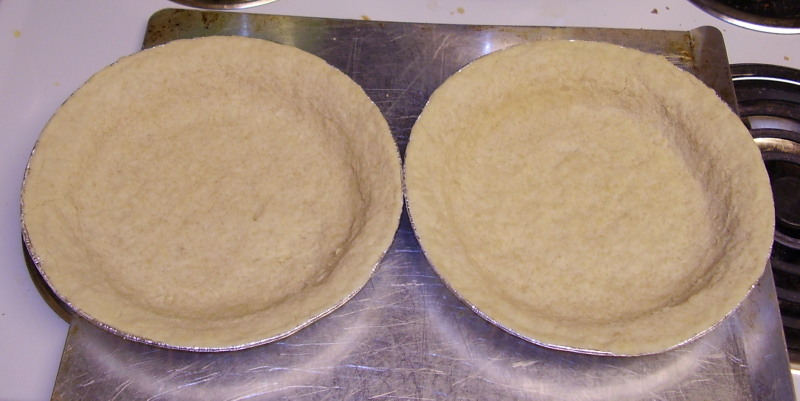
Yesterday I made some pies, sold a few this past week too. Called : Amish Vanilla Pie. A very yummy and unique pie that I enjoy making.


I make the Pie Crust first. Freeze overnight and before filling with the pie,
bake at 400 degrees for approx. eight minutes.

Yummy Amish Vanilla Pie.
 
Many have asked if I was Amish or Mennonite. No, I am not. But was raised near the Amish/Mennonites in Florida. The denomination I grew up in was a simple faith and my love of sewing (and cooking) was nurtured.

Lisa

Tuesday, May 8, 2012

Summer of Dresses

After prayer and intense thought of what I REALLY would like to create this summer for ready-made items in my Etsy Shop...the answer kept coming back....dresses. A woman or girl wearing a feminine dress...becoming a rare sight. And yes, the men DO hold open the door for you, as I have noticed more of when wearing a dress. Just something about the flowing of the skirt fabric that catches the eye...in a delightful way. The feminine beauty of a dress with pleats or gathers is so lovely.

I believe that many are a bit tired of seeing the sloppy, too low and at times ripped jeans that hmmmm, expose too much. Did the designers do that on purpose...making the shirts too short and the pants too low?

Even in houses of worship, sad to say. A friend of mine commented once "Besides the Priest, I am the only one wearing a dress." And she is proud to wear a dress.

From Godey's Magazine, 1852.
Ladies taking tea.
So starting this summer, I have decided to sell the following ready-made:

Dresses for ladies and girls, some outerwear items, such as hoodies and girls coats if time permits, sun bonnets and also warm weather winter bonnets, in addition to the Laura Day and Caroline Everyday caps and also Mantilla's. The 'Ruth' Bonnet will re-appear, as it has been gone for a while off of the Rachels' site.

Ordering from the www.rachelsseamstressservices.com site will continue, so have no fear, that is always available, esp. for boys and mens broadfall trousers. I wish to have the best selling items available for you ready-made and ready to be shipped, with a few extra's to choose from.

Additionally, one can also pay directly by credit card through my Etsy Site, now named Rachels' Niche. You do not need to have an Etsy account! A fantastic added feature by Etsy.

One of my favorite pictures.
A young girl in a dress, with her 'dollie'
in a very pretty dress too!
(Source unknown)

1400's in
Northern Europe
Medieval mother & child


In the Middle Ages, and up to the 1800's, young children wore essentially the same style of clothing as adults. Additionally, boys also wore 'dresses' or 'frocks' until they were weaned.

A dashing young maiden in her white tunic (below left) is a style of a 'dress', from the Middle Ages, made for ease of movement. It appears this is when 'trousers' started to make an appearance in women's clothing.


Actually, 'trousers' did not arrive in women's clothing until WWII and 'Rose the Rivoter'. Men were in 'short supply' and the women went into the factories to work on the supplies/airplanes, etc... needed for the war. Wearing a dress/skirt was a hazard and dangerous, so thus...pants for women became acceptable to a certain degree.
After the war, most women went back to their domestic occupations and/or traditional jobs and shortly later trousers on women were seen more and more. And, that is another story...

I believe that in the past decades, women have lost their sense of feminity and grace given to us by our creator. I choose to be different and not succumb to the worldly and many times immodest fashions of today.

Pax Christi!

Peace in Christ,
Lisa

Tuesday, October 25, 2011

Sewing Machines and their 'parts'

I just received the long awaited for sewing machine part late last week! I have several sewing assignments to catch up on! What a challenge to find the essential part for my two year old Janome machine! The main dilemma was that the sewing center that I do business with, here in Ocala, burned to the ground a few months ago and they lost their entire store! So, they had so many parts coming in to re-supply their inventory, the Janome Supply Center could not keep up with it.

I was so lost without my Janome main machine. A friend knew about my dilemma and offered to me a hardly used, 1950's 'Royal' machine, still in the cabinet that belonged to her mother. I was so surprised when I went over to see the machine, as I did not have knowledge before-hand how unused it was. It took a day or two of tinkering around with, and it works wonderfully...only straight and zig-zag stitching. When I get some time I need to research where to buy a zipper foot for this very usable, but older machine. I think it may be like an old car...built well, but parts are harder to find. And I had hoped for so long to have a back-up machine, and thankfully, now I do.

Meantime...I needed a breather this past week-end from trying to catch up on everything and decided to do some baking. Two loaves of Amish White Bread were made. This makes fantastic French Toast!

Picture to the left is the bread dough divided in half after the first rising. I only use King Arthur Flour for everything I bake.

The picture below is the finished bread. Bakes for 30 minutes after pouring melted butter on top.

That was enough fun for the week! Back to sewing now to catch up. I am ever so happy to have my main sewing machine back working.


Amish White Bread
Ingredients:
2 cups warm water
2/3 cup white sugar
1 ½ tablespoons active dry yeast
1 ½ teaspoons salt
¼ cup vegetable oil
6 cups bread flour
___________________________________________
In a large bowl, dissolve the sugar in warm water and then stir in yeast. Allow to proof until resembles a creamy foam. Mix salt and oil into the yeast. Mix in flour one cup at a time. Kneed dough on a lightly floured surface until smooth. Place in a well oiled bowl, and turn to coat. Cover with a damp cloth. Allow to rise until doubled in bulk, approx. two hours. I always let the dough rise in a warm oven. Punch dough down. Kneed a few minutes and divide in half. Shape into loaves, and place in two well oiled 9x5 loaf pans. (I use glass pans) Allow to rise for 45 minutes, or until dough has risen approx. one inch above the pans. Bake at 350 degrees for 30 minutes.

Tuesday, October 4, 2011

"The Jacket"

Some of the first pattern
pieces of 'The Jacket'
The Jacket was born in early 2011, from an instanteous thought and a quick e-mail that I thought would not travel far.

After some time, plans were made between The Jacket originator (myself) and the recipient of a light tan, sueded western style, custom-made jacket.

It was an exciting time, most certainly, full of anticipation, from choosing the perfect tan sueded fabric and matching lining, to the style, down to the right buttons. The sample jacket then arrived in the mail that I used for measurements. Soon thereafter the sueded fabric and lining arrived from the specialty store. It was so very beautiful. Just touching the fabric gave you a peaceful and serene feeling, like touching the first rose petals that have newly come forth.

Then, I became ill for several months. I needed to keep my other orders going out and did not have too much time to concentrate on 'The Jacket'. But he was always there, patiently waiting for me, beckoning me to come over and sew a few stitches.

Inside lining of a 'welt' pocket.
A light poly/cotton fabric was sewn
over the nylon lining  for extra durability.
The summer of 2011 came with full force and temperatures soared into the triple digits. I have never known heat so intense before. The highest this past summer was 116 degrees and was a day to remember. 'The Jacket' was partially started by this time, and the front 'welt' pockets just starting to appear. He ('The Jacket') was taking form, like molding out of clay.

The pockets were actually quite fun. I was afraid at first, not having the opportunity to make many 'welt' pockets. But I discovered that it was not too difficult at all. One just needs to concentrate and be patient.

All during this time, the recipient was so very patient. Periodic updates were e-mailed to inform of the progress. In mid-September, I knew he needed to be completed, since the cooler weather was arriving soon. He became my friend by this time. Greeting me in the morning with his happy tan color. I looked at the seams and how they were turning out. Everything had to be perfect.

'The Jacket' owner
Made by Rachels'
Seamstress Services
Then the final week arrived (Sept. 27th). It was time to finish up and part with my friend who saw me through many happenings since early March. He joined with me in unison to accept the final seams and the lining, which were hand-sewn in.

He looked so healthy and well and I needed to pack him up and ship him to his new owner, who was so very happy to receive him. Washing/care instructions were given and I have no doubt 'The Jacket' will be treated with respect and dignity.

Good-bye my dear friend. I had the honor and pleasure of putting you together with the utmost care and attention.

For a long a happy life,
Your Creator,

Lisa
of Rachels'

Wednesday, August 31, 2011

Creating a Saddle Pad

The long awaited for Saddle Pad has finally been completed! During the creation process, I have taken pictures as a reference for myself later on, and also to convey the process to you.

A Saddle Pad can be made either in a 'Western' or 'English' style. This Saddle Pad measures 36" x 33", per the request of its new owner, and is typically known as a 'Western' Saddle Pad, since it is squared shaped.

Saddle Pad-Three Layers.
Top: Corduroy fabric; Middle: batting,
Underside: felted wool
White lines on navy blue fabric is used for the quilting guidelines.
To begin, there are several layers. Personal preference can be given to the outside fabric used; however, one must keep in mind the outside fabrics need to be durable and able to withstand wear and repeated washings. For this pad, I used a medium-wale navy blue corduroy fabric, that is a polyester/cotton blend (not heard of too often for a corduroy fabric), the middle is a polyester batting, medium thickness, and the underside is a felted wool fabric.

Additionally, attention needs to be given to the fabric content of the binding. A flimsy cotton fabric is not recommended, as it would wear easily and would not stand up well to the ruggedness required. I chose for this Navy Blue Pad a tan plaid fabric with small navy blue lines, made in a very durable polyester/cotton fabric. All I had in stock were polyester/cotton fabrics with small flowers and I knew the male owner of this pad would want a 'masculine' look. To create visual appeal, I cut the four 3" strips diagonally across the fabric, as shown in the picture below.

The binding strips were made 3" wide because they are folded before being sewn onto the finished edge, thus having two layers of binding and providing extra durability.

After the binding strips are cut out and sewn together lengthwise, I then quilted all three layers, following the white guidelines.Then, the raw edges were trimmed evenly.

36" x 33" Saddle Pad, all three layers quilted together
and raw edges trimmed. Ready for the binding.
Then, the binding was sewn on by machine starting from the top of the pad. Since I folded the 3" binding in half, then stitched 1/4", the binding now measures 1 1/4 inches. It is then ironed (slightly) from the front and pinned to the underside, where I then hand-stitch the binding to the back of the pad, which is felted-wool in this instance.

The hand-stitching does take some time, but well worth it, in my opinion! By hand-stitching. more control is given to each stitch and how the binding lays on the back-side.

For this pad, I added billet straps near the front on both sides, which are 7" long each. The now owner did not need girth (top) straps, so I did not add these on.
Completed Saddle Pad - August 2011
It is always rewarding to complete a project that was so many months in planning! Hoping soon to open a Etsy Shop to sell my Saddle Pads and perhaps a few Quarter Sheets for our horse friends, (shop name yet to be decided as of this writing), who also need protection from the saddle and weather elements.

Blessings,
Lisa
of Rachels'

Thursday, August 11, 2011

Plaid & Tartan Plaid Fabric

I LOVE plaid. Now and then I would make a dress in a small, flowery print, but there is something special about plaid that has always attracted me. After researching for this article which I enjoyed very much, I now know why. Plaid is organized and will make the person wearing it feel organized and at times secure. The intricate grids and squares repeating in the design, in various colors, has a soothing effect. Lately, I have been able to purchase several plaid fabrics at thrift stores. Not sure what all of these will be made into, but I am sure over time they will be used.

With many Blessings, Lisa
Left to right: A blue striped 2 yd. fabric piece,
although not plaid, is a very organized design..
Black & White: 'House of Stewart 2.5 yd. piece.
This would be considered a 'tartan plaid'
because any way you hold the fabric
piece, the design remains the same.
Light blue, peach and green plaid.
Perfect for a young girls' dress.

Plaid has its origin as far back as 100 B.C., when it was created by ancient Celtic populations. Thus, the plaid pattern in fabric is older than Jesus, but younger than dinosaurs. Although the print had been around for centuries, it didn’t take off until the late 17th century as the apparel of Scotland. Although Scottish plaid came in the form of kilts and not trendy button-downs, plaid became a sign of rebellion against the English so much so that authorities banned it after the Scottish rebellion of 1746.

What is a Tartan Plaid?

Banks and De La Chappelle began their research into tartan six years ago after New York Times photographer Bill Cunningham, who tracks fashion on the streets of Manhattan, noticed an odd phenomenon in the days following 9/11: women were wearing a lot of plaid.

"The world was rocked and they were looking for something that they could hold onto, that they knew would not deviate, because so much had changed overnight," Banks said.

"A tartan plaid, first of all, is Scottish, as opposed to American or English. It's Scottish," De La Chappelle said.

Beautiful Burgandy/Cream plaid.
Courtesy of Gehman's Country Fabrics.
A tartan plaid pattern has to be made up of perfect squares, or it is not 'tartan'. Technically, a tartan plaid can be turned 180 degrees and is exactly the same.

A plaid, on the other hand, can have stripes that clearly run in a specific direction. In other words: all tartan is plaid, but not all plaid is tartan.


But whether authentic tartan or simply plaid, the stripes and squares seem to have a lasting and universal appeal. "It's one of the few patterns men wear, you know" Banks said. "You may find the most conservative man, if he wears a pattern, more than likely it's tartan."

Left to right: Medium green plaid with blue and cream lines.
 Planning to use as binding on a Saddle Pad.
Mauve and cream plaid with very faint cream and green lines.
Planning to make into a early 1800's Regency Short Coat.
"Plaid is very organized," De La Chappelle said. "It has grids. It's possible that these grids make you feel organized."

But tartan wasn't always a symbol of security. At the same time colonists in America were demanding their independence from England, there was trouble in Scotland as well. Scottish Highlanders caught wearing tartan to signify their clans faced arrest, or worse. "It became the symbol of rebels who were against the Crown," De La Chappelle said. "And the British were so angry that they banned the wearing of tartan for 37 years. If you were a Highlander, men in particular, you could not put on tartan without being accused of treason and banished to the colonies for six months." As is often the case, banning tartan only made it more desirable.

"When they were able to wear it again, it came back with a vengeance," De La Chappelle said. Later, it was actually English royals - the Duke of Windsor and his wife Wallis Simpson - who made tartan stylish for the international jet set.


Sunday, July 24, 2011

And there are...Broadfalls

Four pairs broadfalls
custom-made in July 2011
by Rachels' Seamstress Services

In the mid 1800's, broadfall trousers came into use and have a fall that is from hip to hip...thus the name broadfall.

Broadfall trousers were worn by the general population (of men) during the late 1700's through the mid 1800's.

Before the invention of the zipper, the buttoned fly front had been used in the early 1700's, by the later part of the century all breeches, pantaloons, trousers and overalls used the narrow fall closure...the first broadfall option in trousers. Narrow fall broadfalls are now made mostly for historical period re-enactments.


Later on, after pantaloons were invented, the fly front came about. The broadfall remained as a sporting attire option, and is now not worn by the general population, only seen uniformly in the Amish, some Mennonite, Conservative Quaker and other Anabaptist groups.


Small Boys' Broadfall Trousers with
added 'front flaps'.
Can be purchased in Rachels' 'Etsy Shop'.
 Suspenders

Presently, most trousers are held up with the use of a belt which is passed through the belt loops on the waistband of trousers. However, this was traditionally a style acceptable only for casual trousers and work trousers; suit trousers and formal trousers were suspended by the use of braces (called suspenders in American English) attached to buttons located on the interior or exterior of the waistband. Today, this remains the preferred method of trouser support amongst classical British tailoring and those who wear broadfall trousers. Many men claim this method is more effective and more comfortable because there is no cinching of the waist or periodic adjustment.